Year 2
Grade 1 (US) · ages 6–7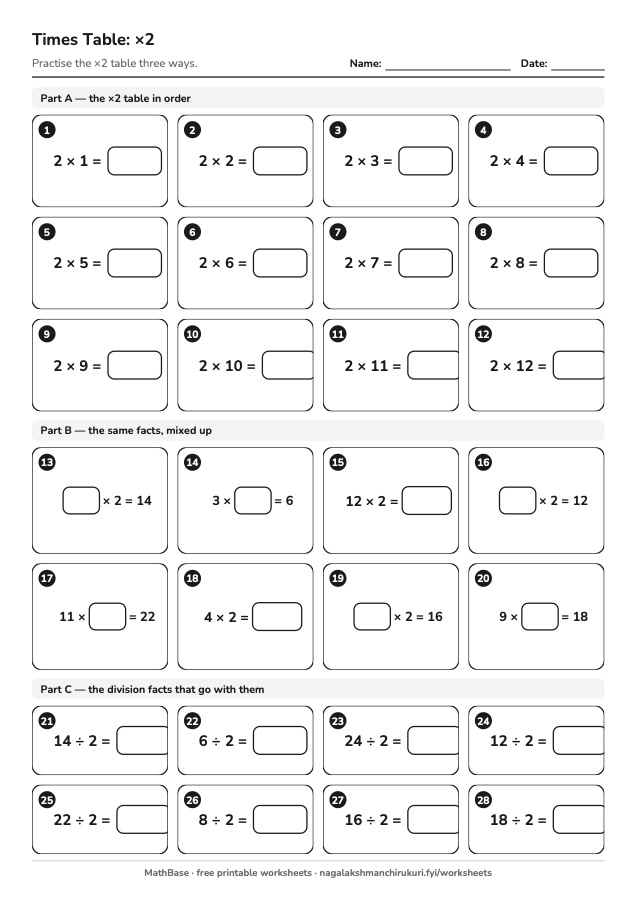
2 Times Table
The 2 times table practised three ways on one page.
Year 2 · ages 6–7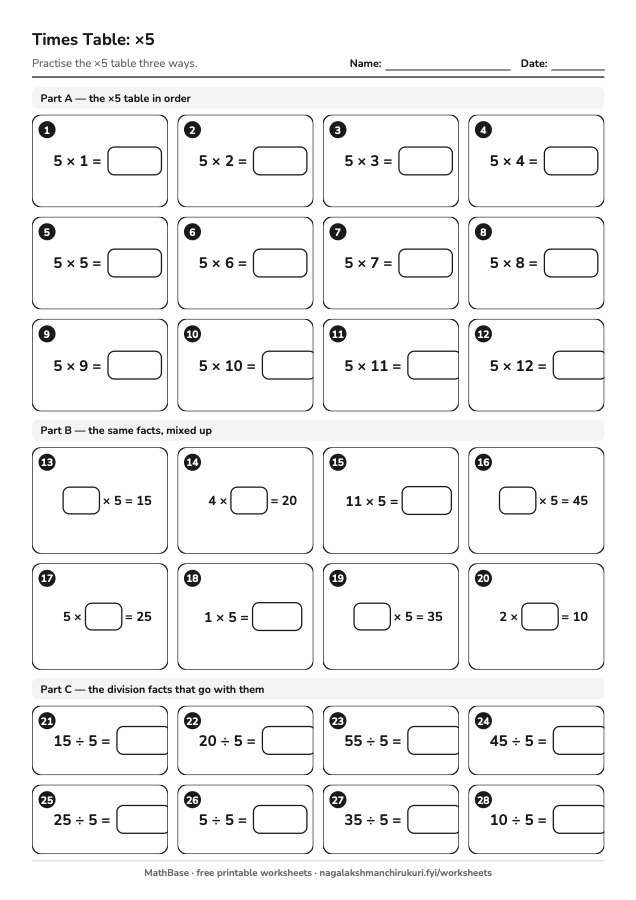
5 Times Table
The 5 times table practised three ways on one page.
Year 2 · ages 6–7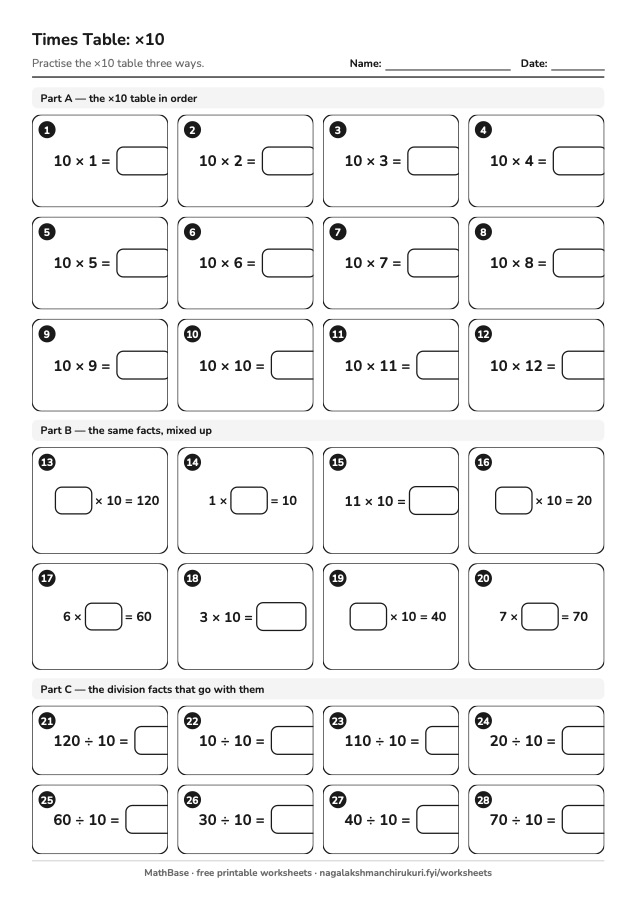
10 Times Table
The 10 times table practised three ways on one page.
Year 2 · ages 6–7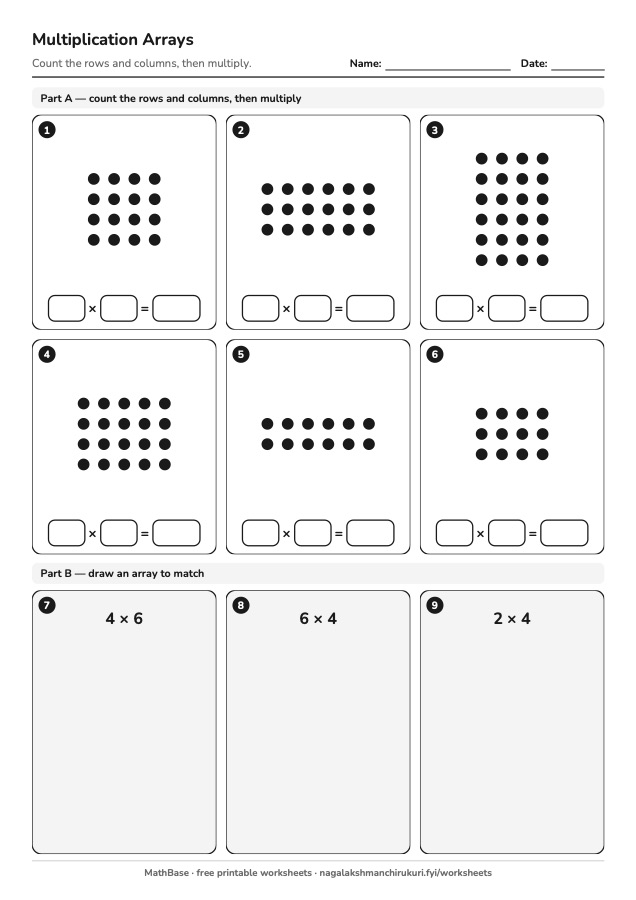
Multiplication Arrays
Count the rows and columns of an array, then multiply. Arrays show why multiplication works, not just what the answer is.
Year 2 · ages 6–7Year 3
Grade 2 (US) · ages 7–8
Year 4
Grade 3 (US) · ages 8–9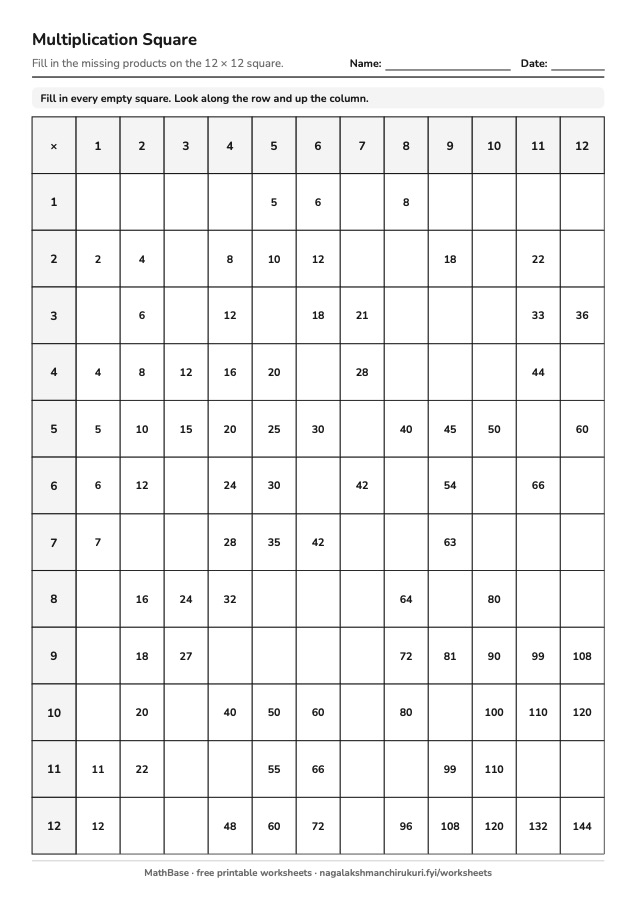
12 × 12 Multiplication Square
Fill in the missing products on the 12 × 12 square, the page most schools want learned by the end of Year 4.
Year 4 · ages 8–9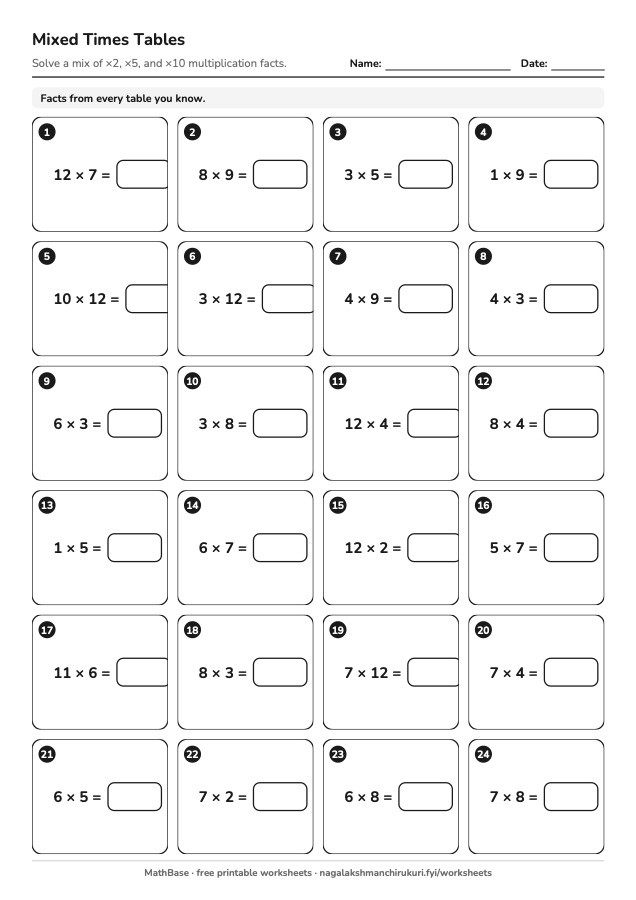
Mixed Times Tables
Twenty-four multiplication facts drawn from across the tables, so recall is tested out of order.
Year 4 · ages 8–9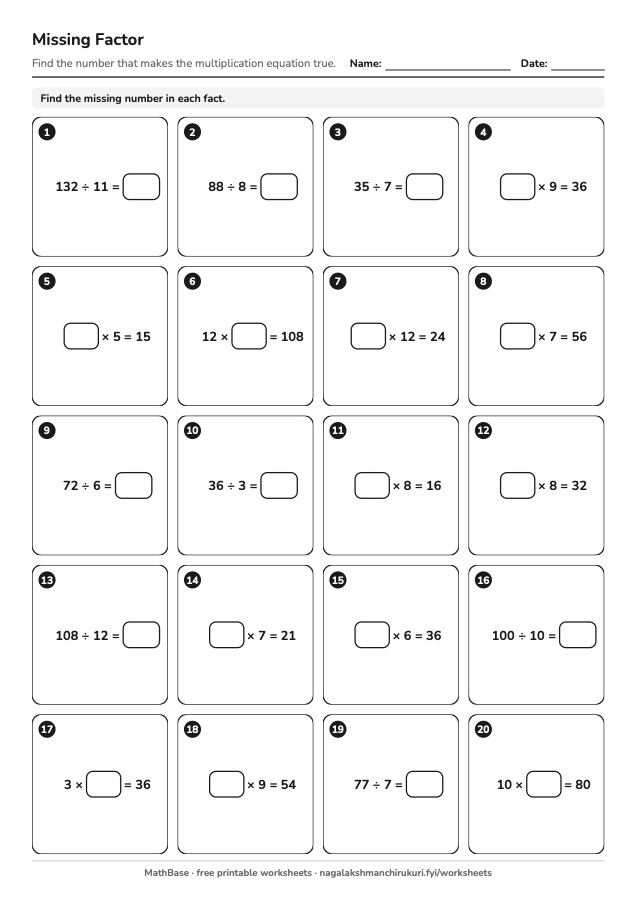
Missing Number Multiplication
Multiplication facts with a gap in one of three places, which makes children use division and the inverse rather than recite.
Year 4 · ages 8–9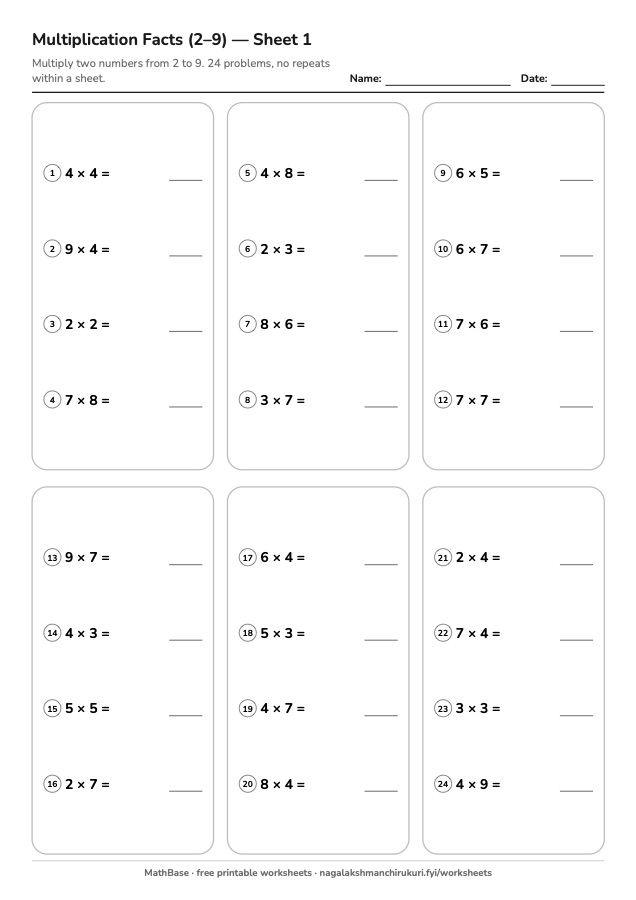
Multiplication Facts (2 to 9)
Twenty-four multiplication facts using the 2 to 9 tables, laid out in boxes of four.
Year 4 · ages 8–9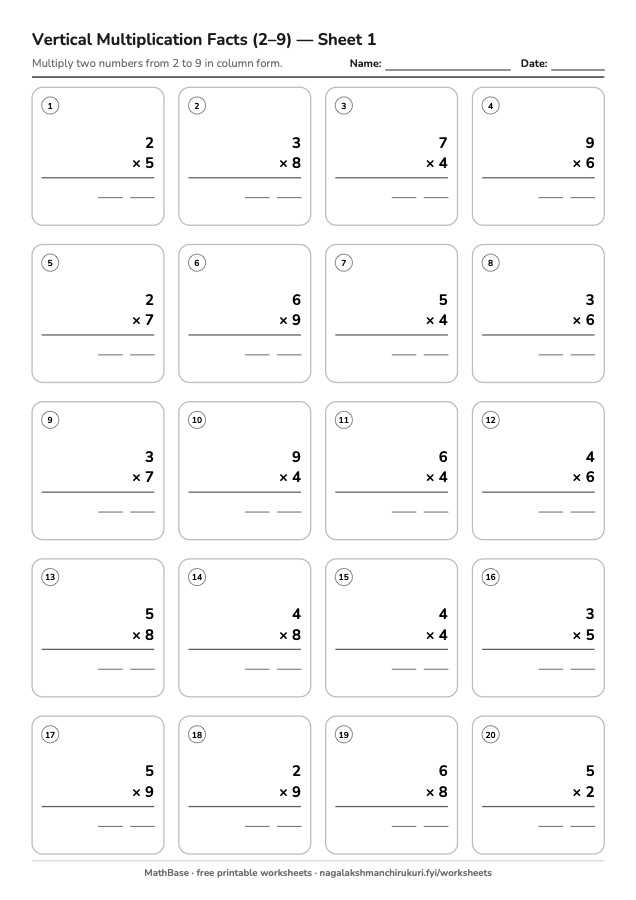
Vertical Multiplication Facts (2 to 9)
The 2 to 9 tables written in columns, one number above the other, ready for the move to long multiplication.
Year 4 · ages 8–9Year 5
Grade 4 (US) · ages 9–10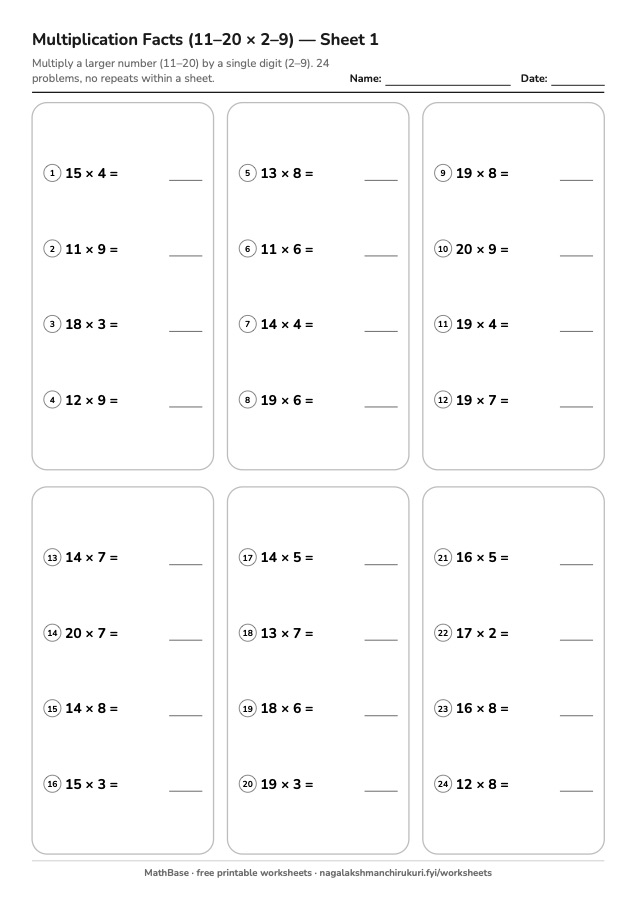
Multiply 11 to 20 by 2 to 9
Two-digit numbers between 11 and 20 multiplied by a single digit, a step beyond the 12 times table.
Year 5 · ages 9–10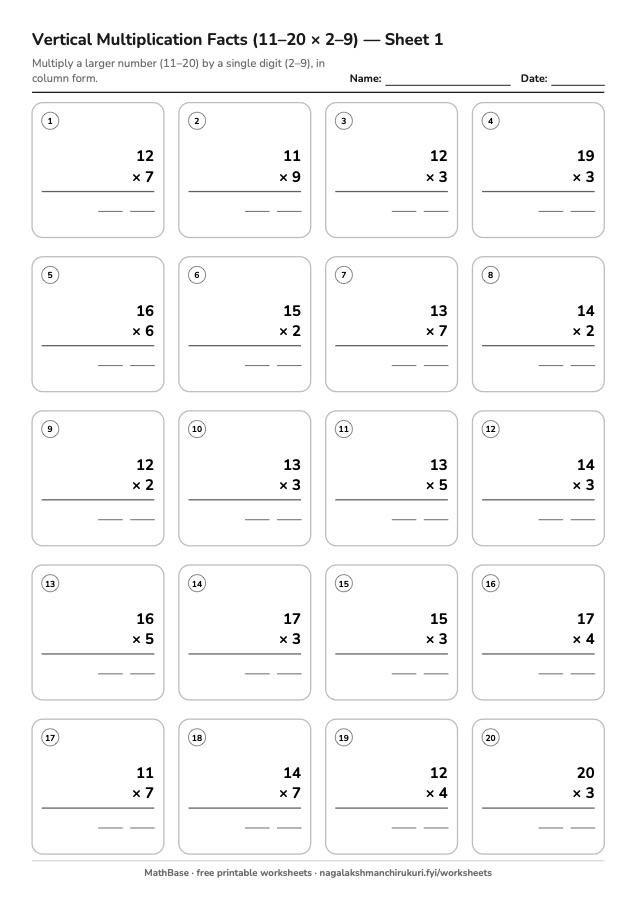
Vertical Multiplication (Two-Digit by One-Digit)
Short multiplication set out in columns: a number from 11 to 20 times a single digit.
Year 5 · ages 9–10How to use these
A tip for times tables
Short and often beats long and rarely: five minutes a day with one table is more effective than a weekly hour. Do the 2, 5 and 10 tables first.
More topics
Practise on a screen with MathBase
The free-to-start maths app for ages 3–20, with games, lessons and a progress report for parents. No ads.