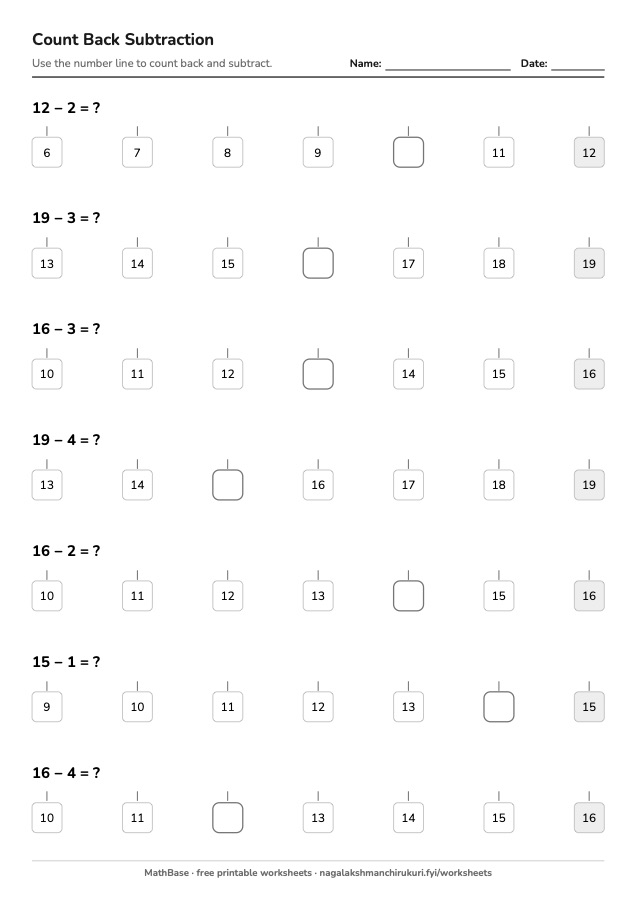
- One A4 page, black and white, prints on any home printer
- Answer space built into the page, plus a separate answer key
- Free, with no sign-up and no ads
Year groups show where this is usually met in England. Other countries order topics differently, so use the age as a guide, not a rule.
A tip for subtraction
Start with the number line sheets, then move to facts and word problems. A child who can count back confidently finds borrowing far easier later.
More subtraction worksheets
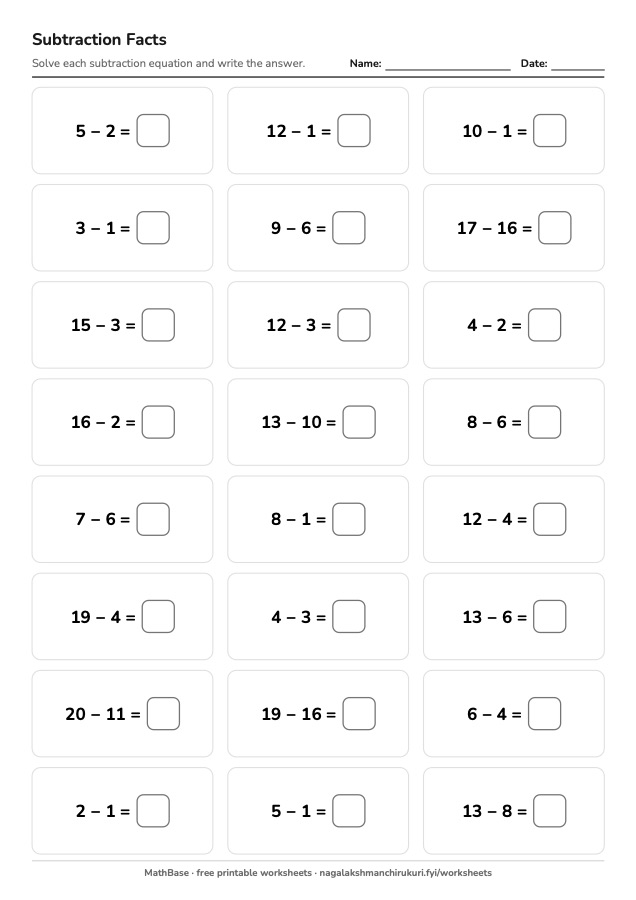
Subtraction Facts to 20
A page of subtraction equations within 20, for building quick recall.
Year 2 · ages 6–7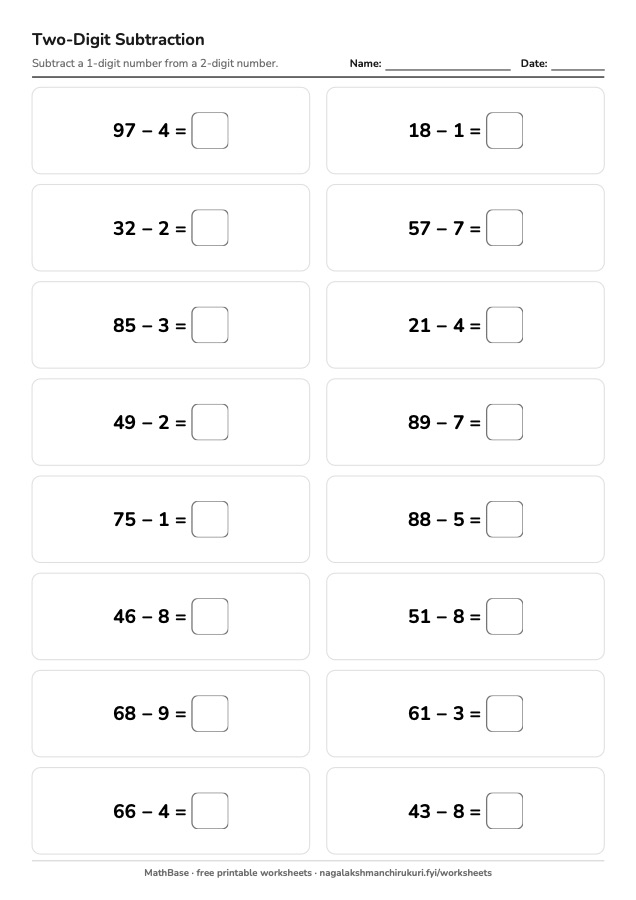
Subtract a 1-Digit Number from a 2-Digit Number
Takes a single digit away from a two-digit number, the bridge between facts to 20 and column subtraction.
Year 2 · ages 6–7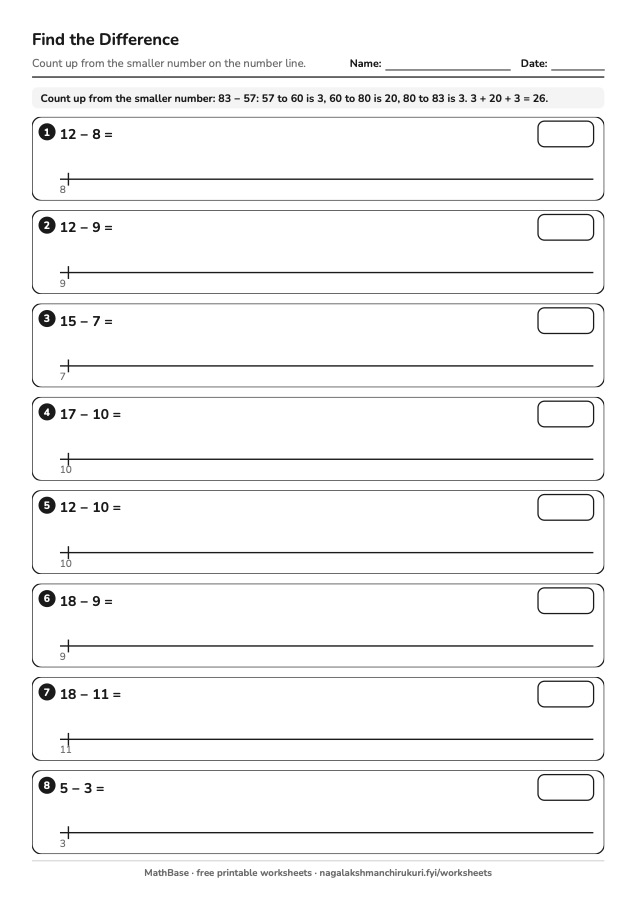
Find the Difference
Counts up from the smaller number on a number line to find the difference, a method that suits numbers that are close together.
Year 2 · ages 6–7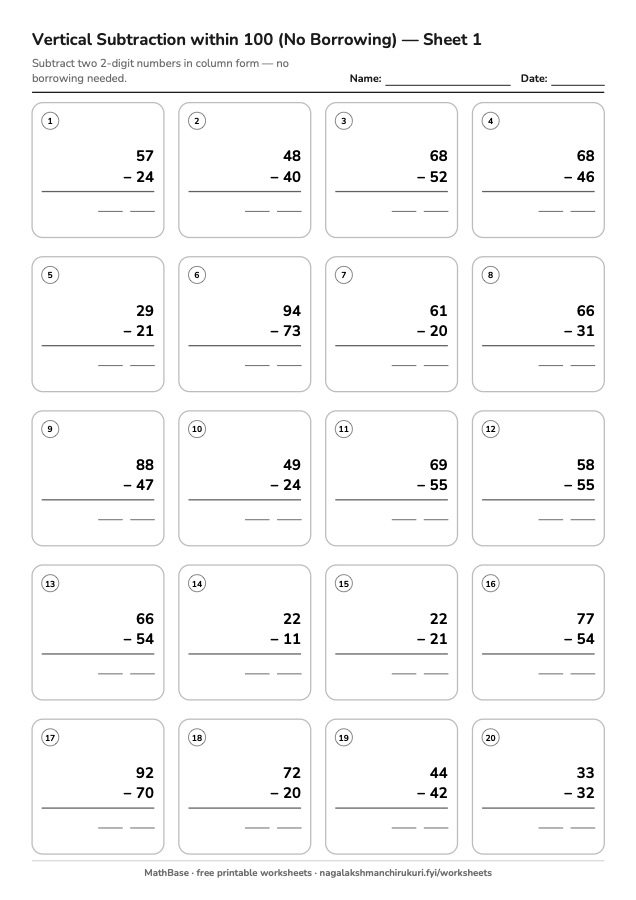
Vertical Subtraction (No Borrowing)
Two-digit subtractions in columns where every digit on top is bigger than the one below, so there is nothing to exchange.
Year 2 · ages 6–7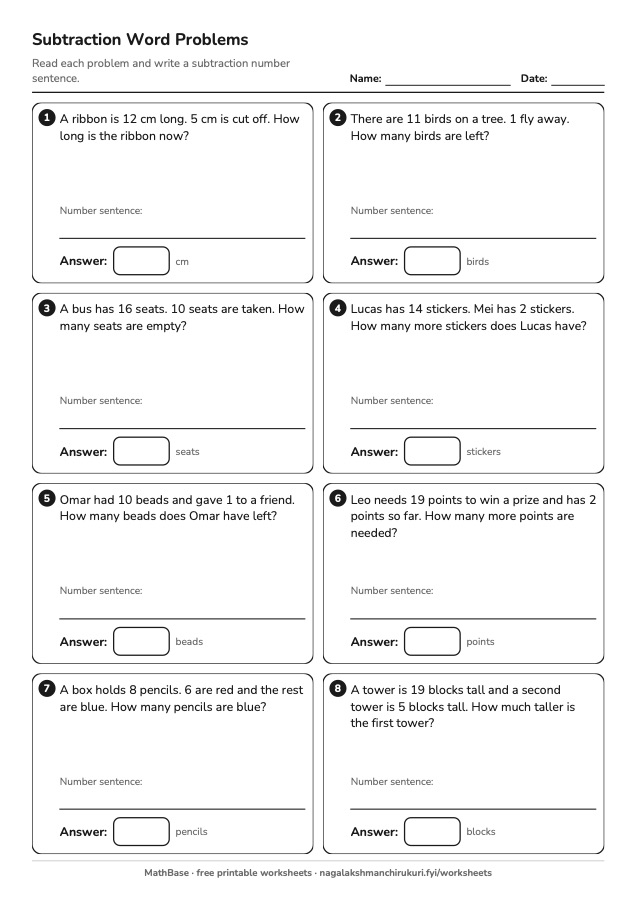
Subtraction Word Problems
Short story problems where children choose subtraction and write the number sentence.
Year 3 · ages 7–8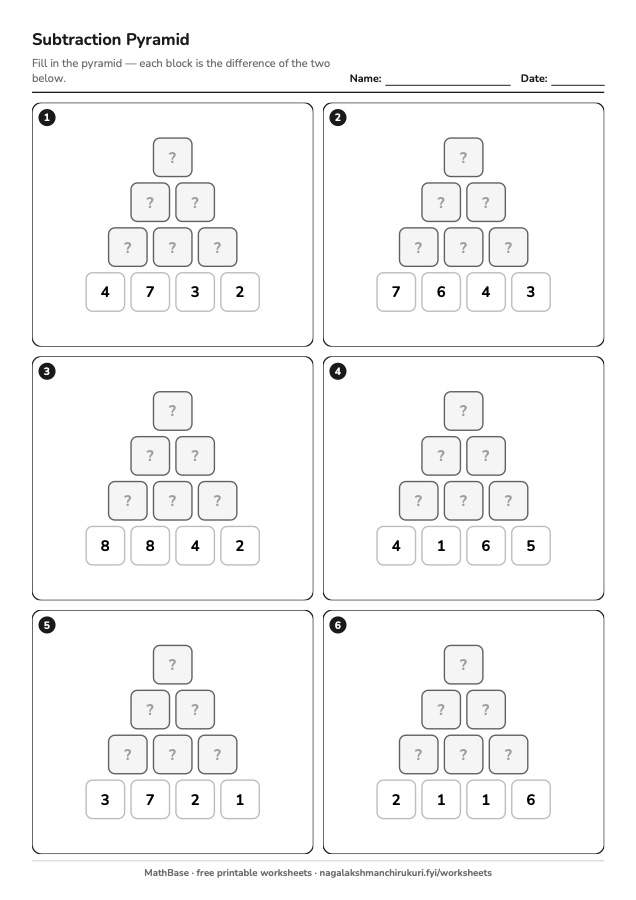
Subtraction Pyramid
Each block is the difference of the two below it, a puzzle format that makes repeated subtraction feel like a game.
Year 3 · ages 7–8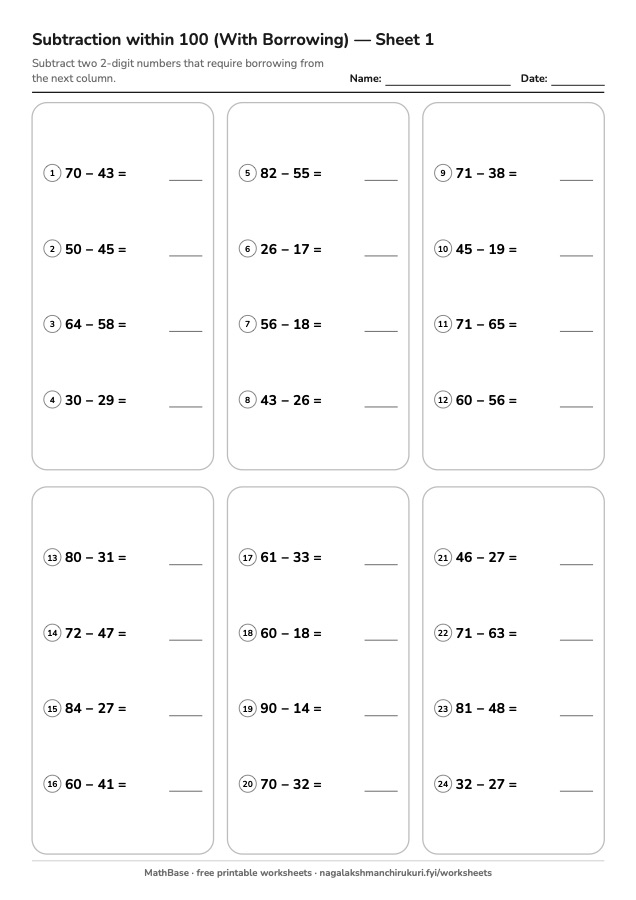
Subtraction within 100 (With Borrowing)
Two-digit subtractions that need an exchange from the tens column, on a full page of practice.
Year 3 · ages 7–8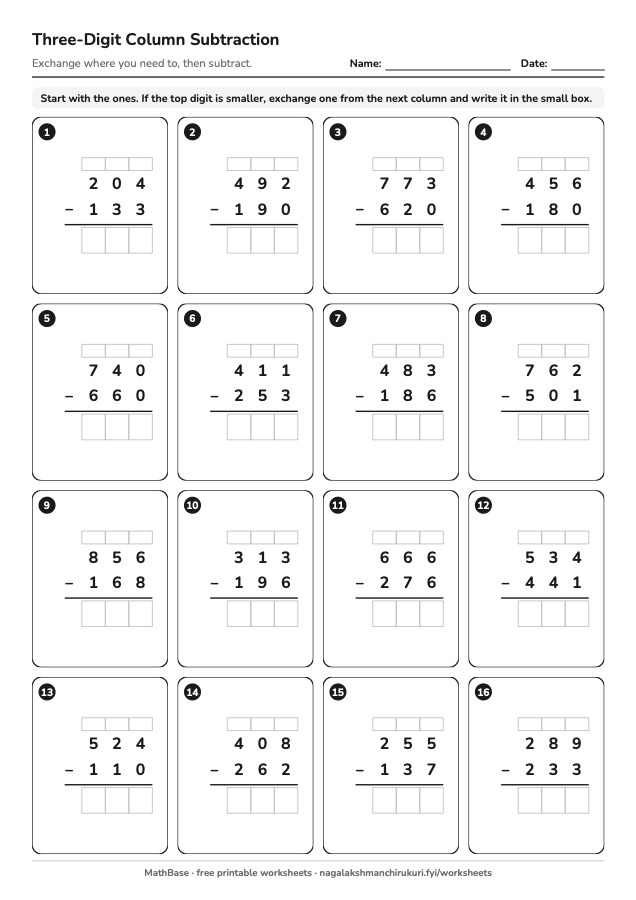
Three-Digit Column Subtraction
Hundreds, tens and ones lined up in columns, with exchanges where they are needed.
Year 3 · ages 7–8Practise on a screen with MathBase
The free-to-start maths app for ages 3–20, with games, lessons and a progress report for parents. No ads.