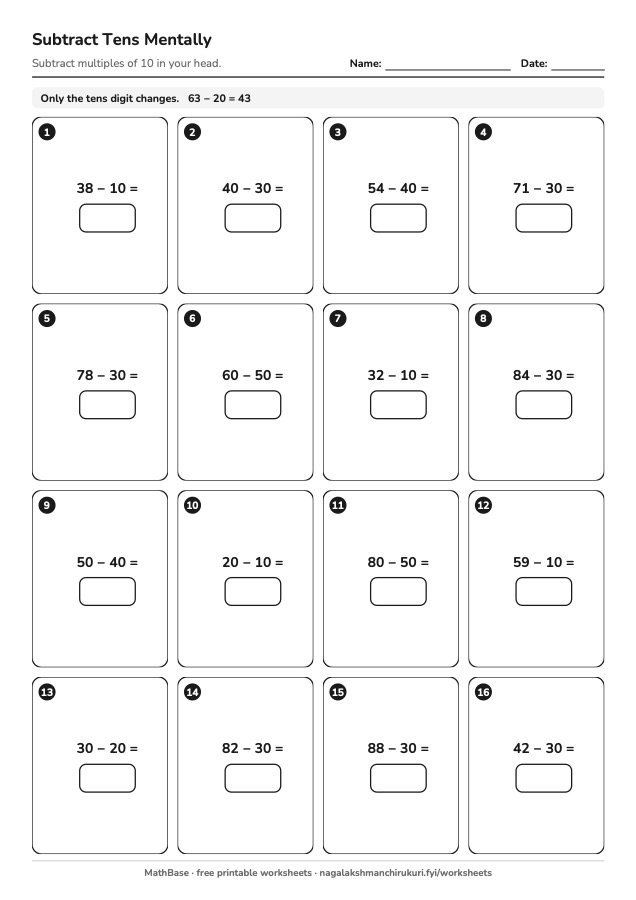
- One A4 page, black and white, prints on any home printer
- Answer space built into the page, plus a separate answer key
- Free, with no sign-up and no ads
Year groups show where this is usually met in England. Other countries order topics differently, so use the age as a guide, not a rule.
A tip for mental maths
Little and often works best. A minute of bonds or doubles each day builds the recall that written methods later rely on.
More mental maths worksheets
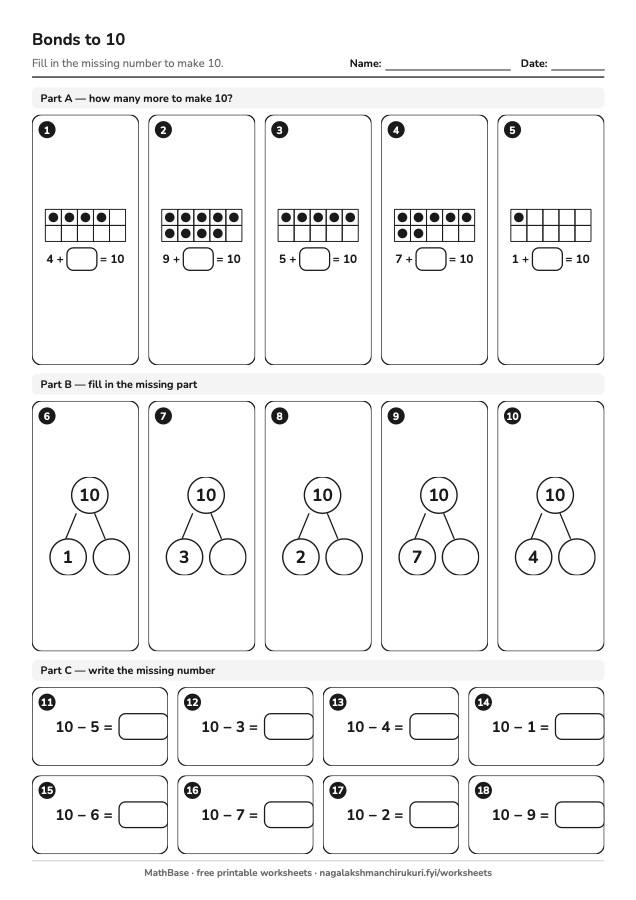
Number Bonds to 10
The pairs that make ten, shown on ten frames, in part-whole models and as equations, so the fact is met three ways.
Year 1 · ages 5–6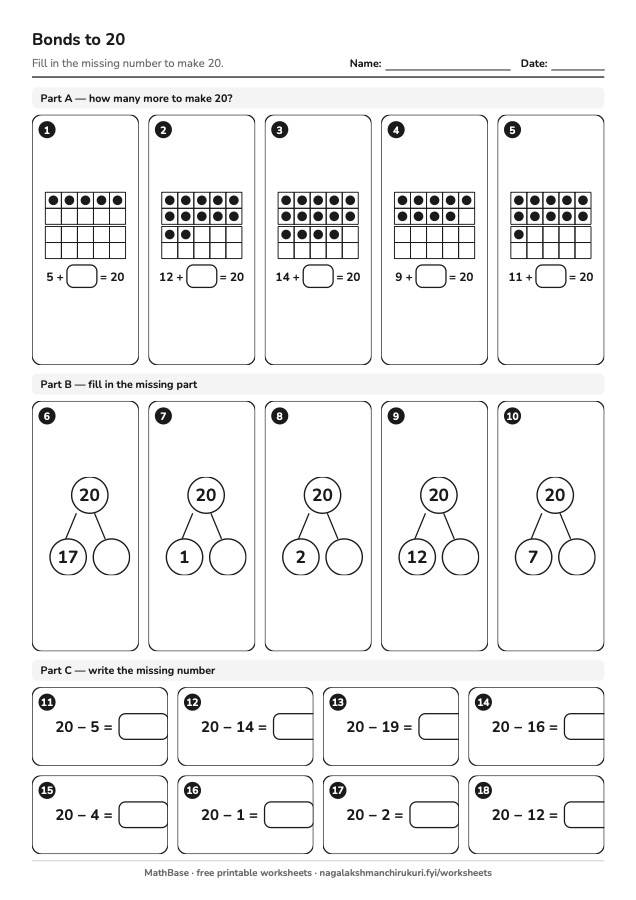
Number Bonds to 20
Pairs that make twenty on stacked ten frames, part-whole models and missing-number equations.
Year 2 · ages 6–7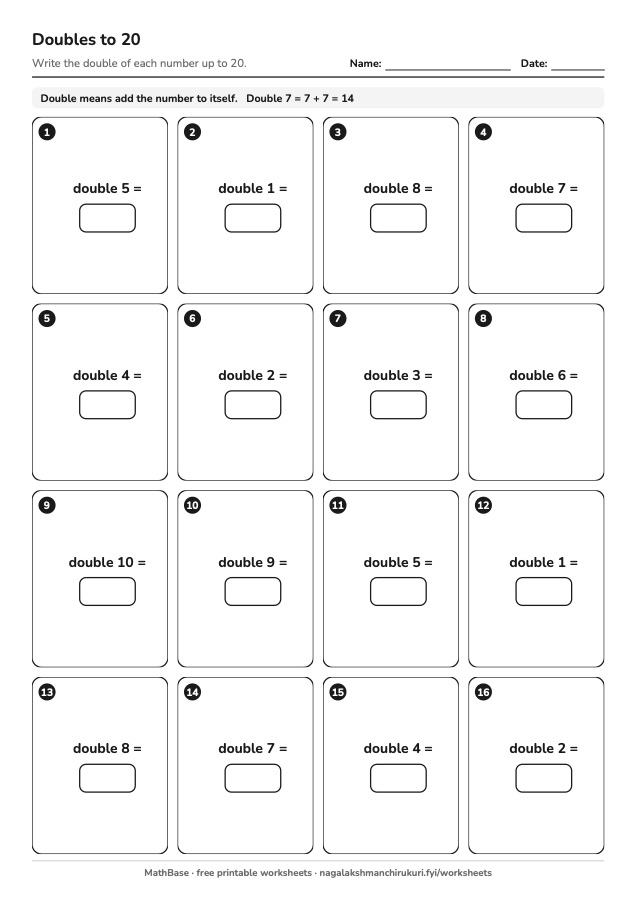
Doubles
Sixteen doubles, each one a number added to itself, to build the quick recall that near doubles and times tables rest on.
Year 2 · ages 6–7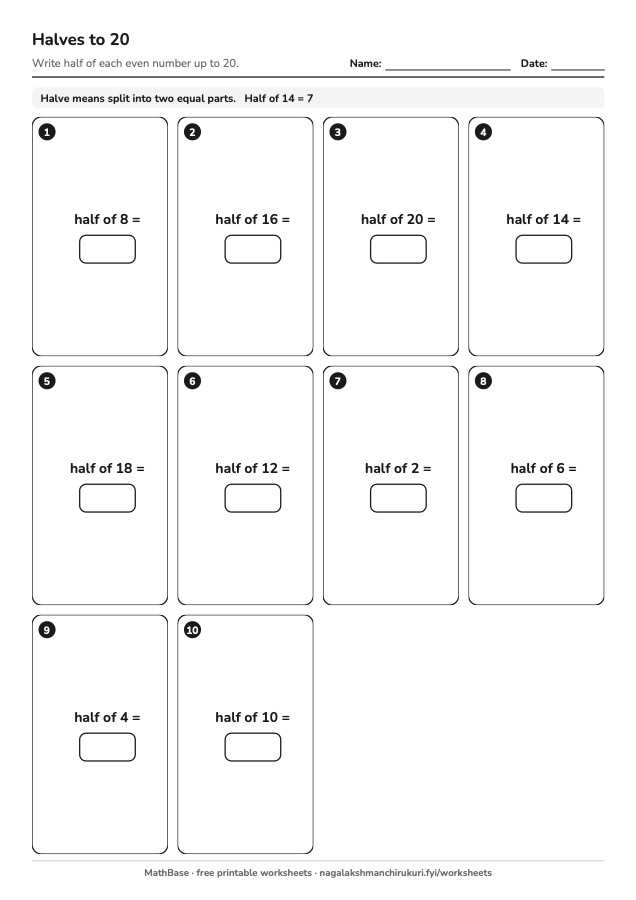
Halving Even Numbers
Sixteen even numbers to halve, the inverse of doubling.
Year 2 · ages 6–7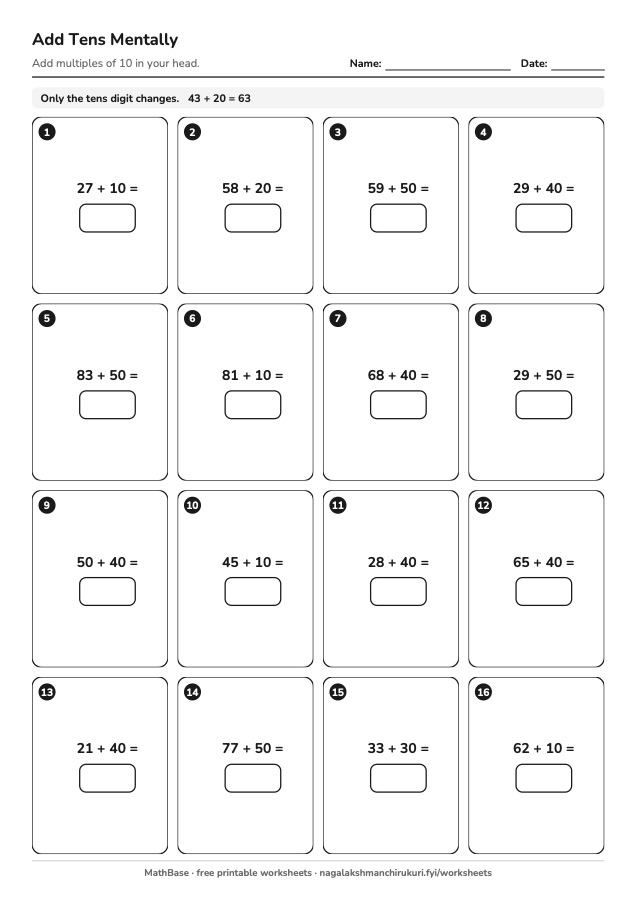
Add Multiples of 10
Add a multiple of ten to a two-digit number and see that only the tens digit changes.
Year 2 · ages 6–7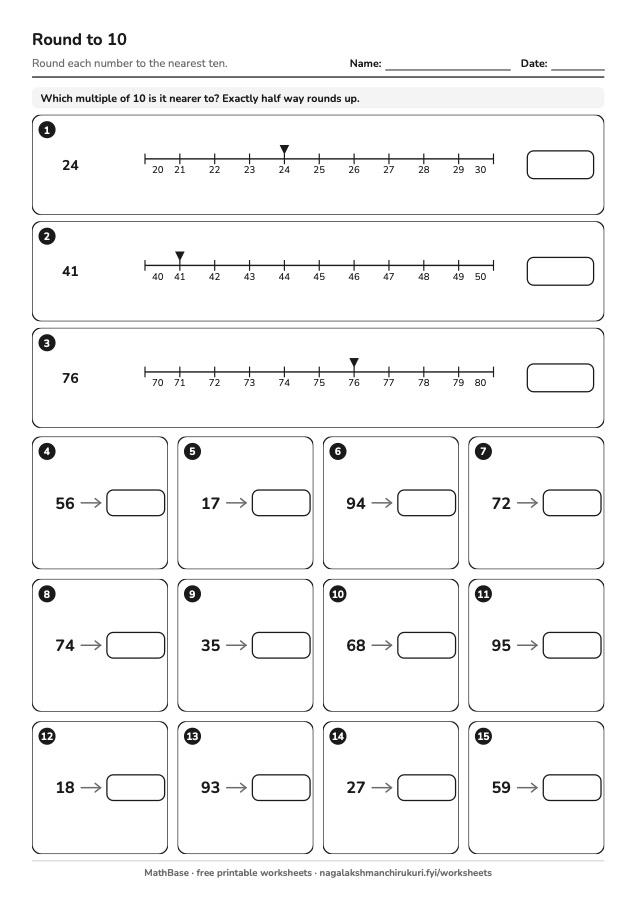
Rounding to the Nearest 10
Three number lines to show which ten a number is nearer to, then twelve more to round from memory.
Year 3 · ages 7–8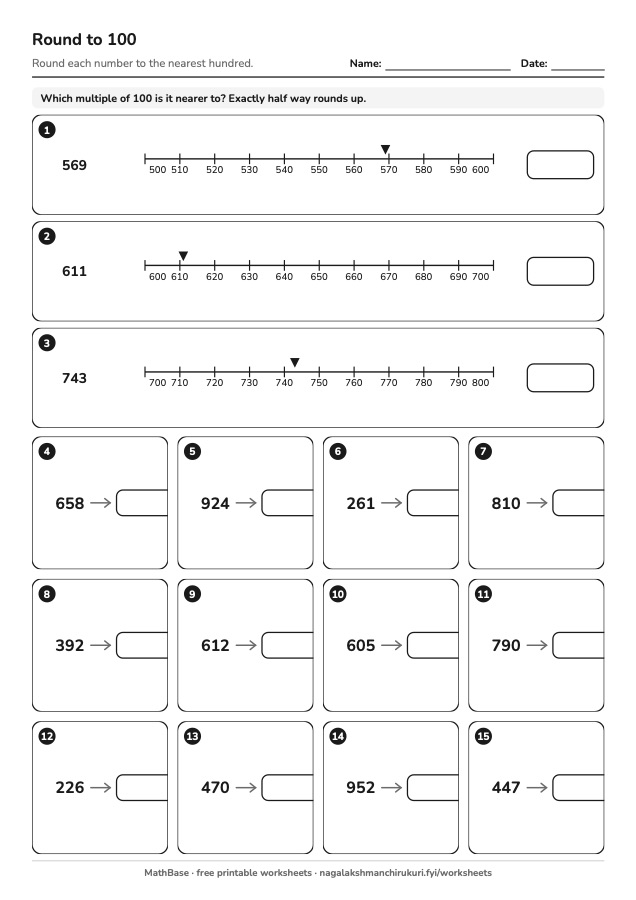
Rounding to the Nearest 100
Number lines first, then a dozen numbers to round to the nearest hundred, with exact halves rounding up.
Year 3 · ages 7–8Practise on a screen with MathBase
The free-to-start maths app for ages 3–20, with games, lessons and a progress report for parents. No ads.