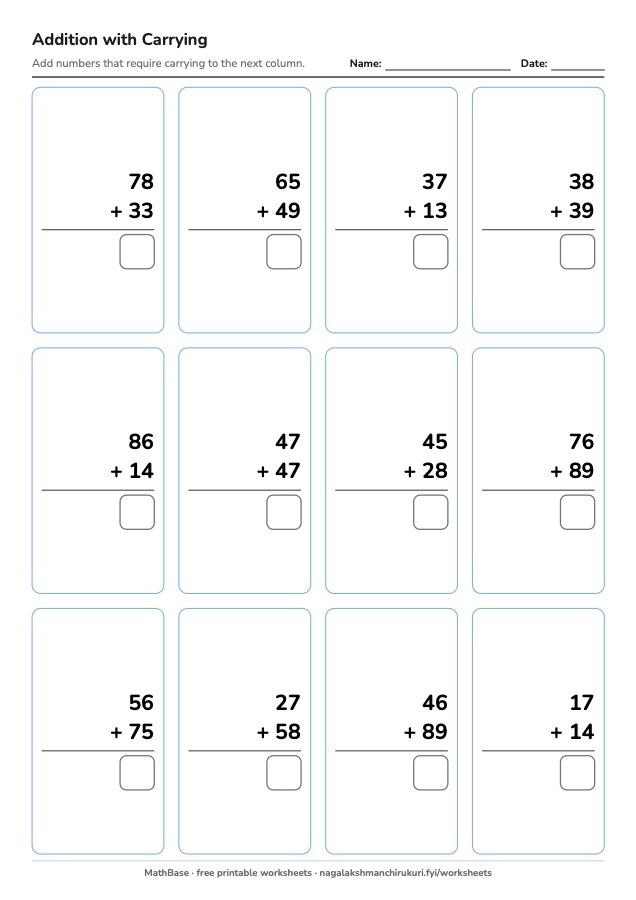
- One A4 page, black and white, prints on any home printer
- Answer space built into the page, plus a separate answer key
- Free, with no sign-up and no ads
Year groups show where this is usually met in England. Other countries order topics differently, so use the age as a guide, not a rule.
A tip for addition
Making ten is the habit that carries furthest: if a child knows 7 + 3, they can work out 7 + 5 by splitting the 5. The make-ten sheet practises exactly that.
More addition worksheets
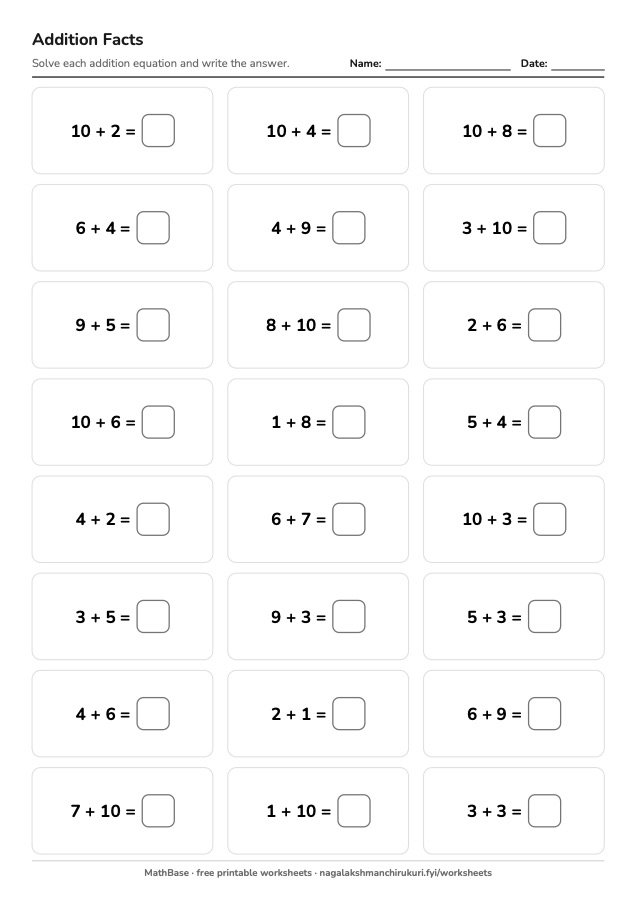
Addition Facts to 20
A page of addition equations within 20, for quick recall of number facts.
Year 2 · ages 6–7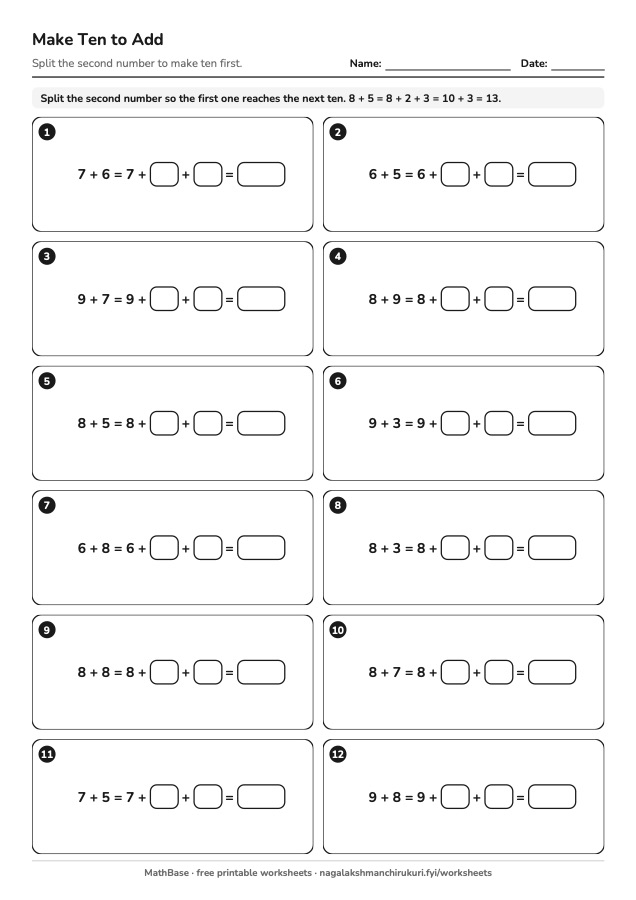
Make Ten to Add
Split the second number to make ten first, then add the rest. A strategy that makes mental addition faster.
Year 2 · ages 6–7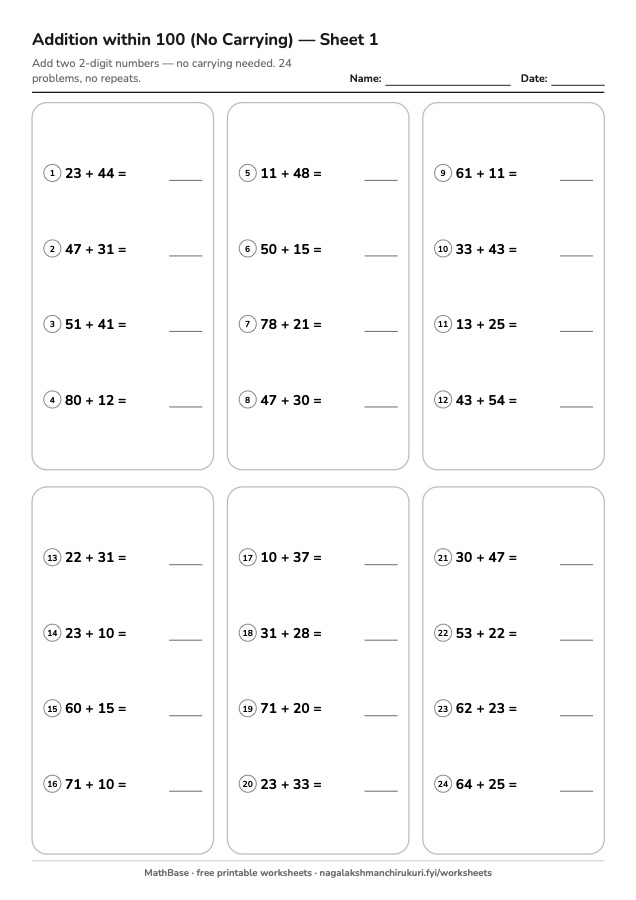
Addition within 100 (No Carrying)
Twenty-four two-digit additions where no column adds past nine, so children practise place value before they meet carrying.
Year 2 · ages 6–7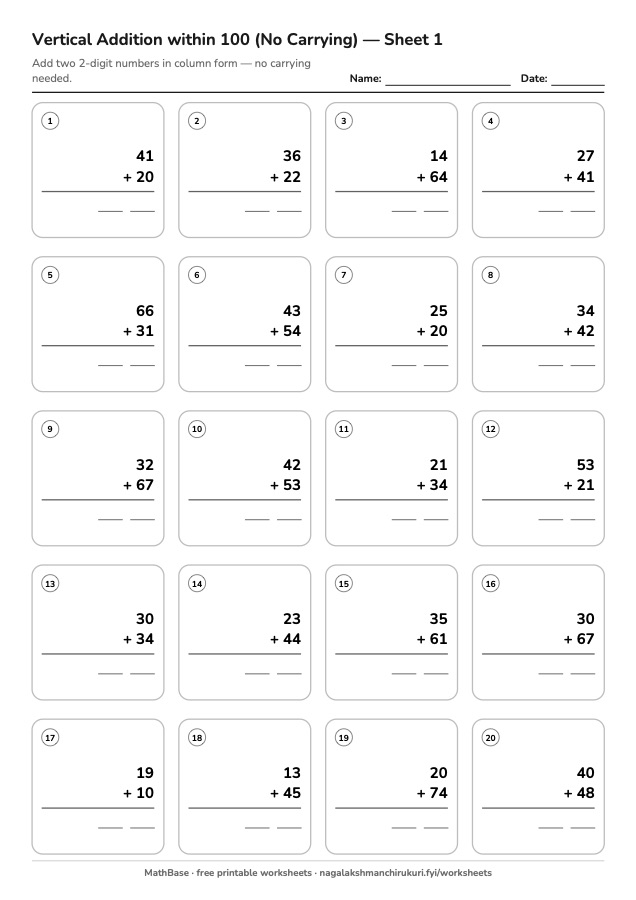
Vertical Addition (No Carrying)
Two-digit sums written one above the other in columns, with no carrying needed, to build tidy column habits.
Year 2 · ages 6–7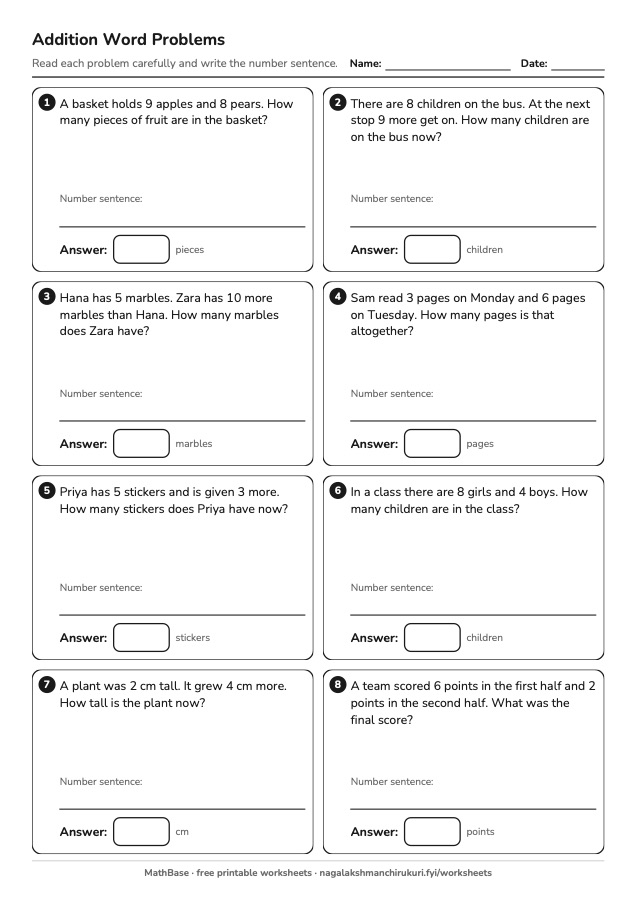
Addition Word Problems
Short story problems where children pick out the numbers and write the addition sentence.
Year 3 · ages 7–8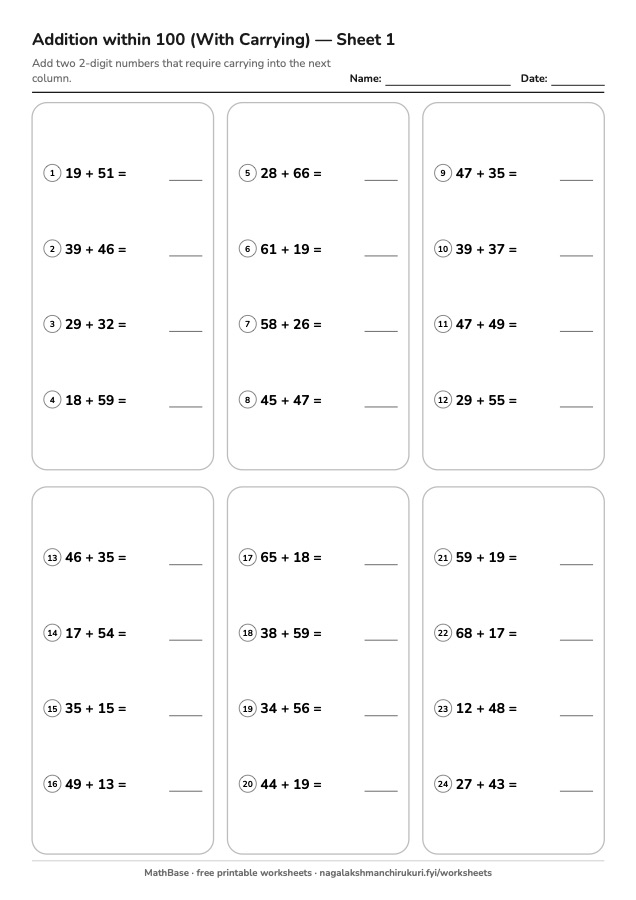
Addition within 100 (With Carrying)
Twenty-four two-digit additions where the ones column has to carry into the tens, set out in neat boxes.
Year 3 · ages 7–8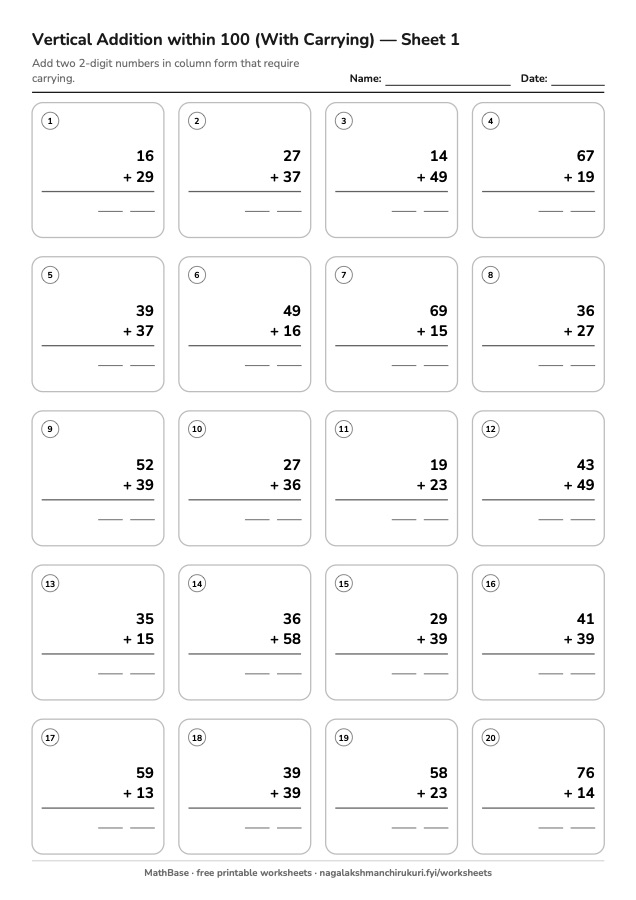
Vertical Addition (With Carrying)
Column addition of two-digit numbers where the ones add to ten or more, with room to write the carried digit.
Year 3 · ages 7–8Practise on a screen with MathBase
The free-to-start maths app for ages 3–20, with games, lessons and a progress report for parents. No ads.